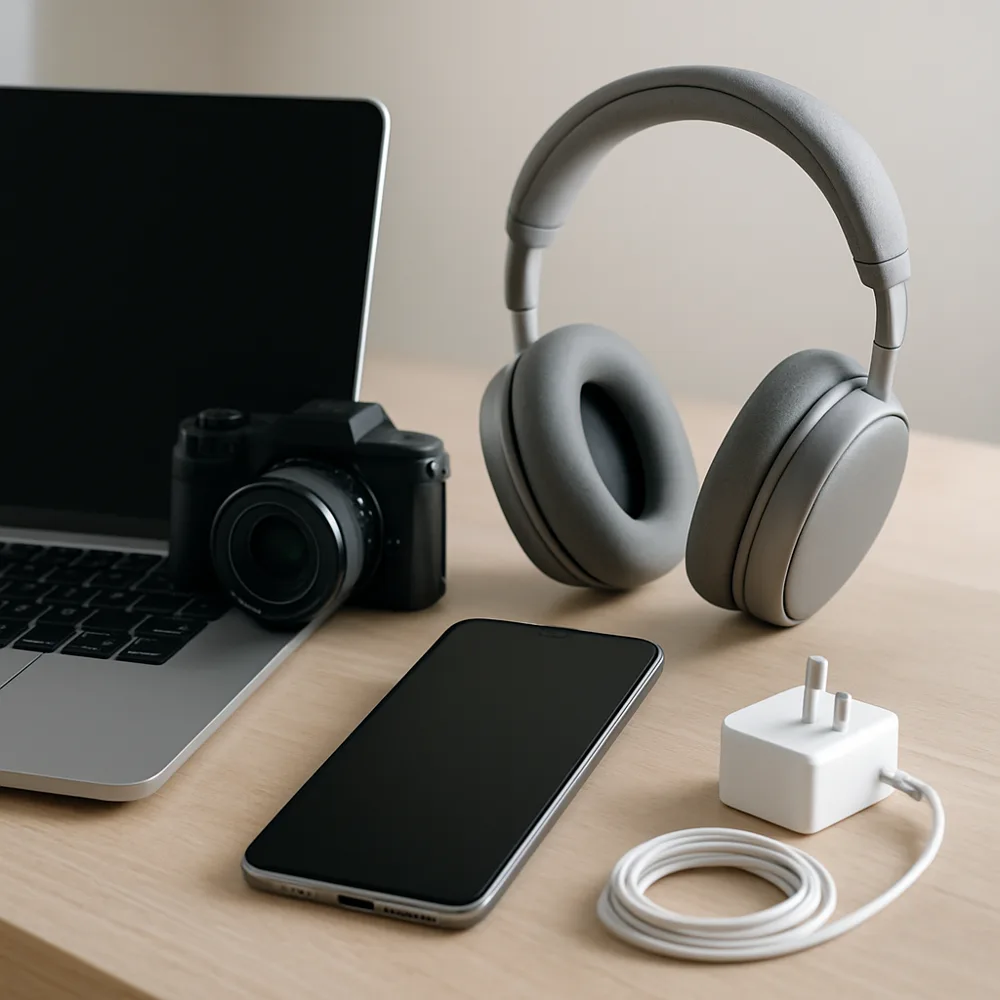
Headphones that work well at a desk may not be ideal for a commute. Over-ear designs can feel comfortable for long sessions and may provide strong passive isolation, while compact earbuds are easier to carry. Try to assess fit and pressure if possible, because comfort depends on head shape, ear size, glasses, and how long you wear a pair at a time.
Active noise cancellation can reduce steady sounds such as engine rumble, but it does not make every environment silent. Transparency or ambient modes help you hear announcements and nearby conversation without removing the headphones. For calls, look at microphone performance and controls, and check whether the device supports the connection methods you need across your phone and computer.
Battery life, charging method, durability, and replacement parts also influence long-term usefulness. Wireless models are convenient, while a wired option avoids charging and can be helpful for certain devices. Check how the headphones behave when their battery is depleted and whether they can connect to more than one device. Choose a sound profile you enjoy at moderate volume, and take listening breaks during extended sessions.
Practical Details That Make a Difference Day to Day
Once you have narrowed the field by comfort, noise cancelling and battery life, smaller practical details often decide whether a pair becomes your everyday choice or ends up in a drawer. Many of these only show up after a few weeks of real use, so it helps to think about them before you buy.
Portability and storage
Look at how the headphones fold or collapse and how large the case is. A hard case protects the hinges and ear cushions in a crowded bag, while a soft pouch saves space but offers less protection. For earbuds, the charging case is part of the product: check that it closes securely, fits comfortably in a pocket and has a battery indicator you can read at a glance.
Switching between devices
If you move between a laptop for video meetings and a phone on the train, multipoint Bluetooth can save a lot of re-pairing. Support varies between models, and some only allow one high-quality connection at a time, so read the specifications carefully. A companion app can add useful options such as adjustable noise cancelling, equaliser settings and firmware updates, but it is worth confirming that the core features still work without it.
Travel-specific considerations
Some in-flight entertainment systems still use a wired headphone socket, so a pair that accepts a cable, or a small Bluetooth transmitter, can be handy on long flights. Over-ear models with soft cushions can become warm over several hours, so consider breathable materials if you travel often. Touch controls are convenient, yet they can be triggered accidentally when adjusting the fit or leaning against a seat; physical buttons are easier to use by feel.
Care and longevity
Ear cushions and tips wear out with regular use, so check whether replacements are easy to find. Wiping the cushions and keeping the charging contacts clean helps maintain comfort and reliable charging. If you work in a shared office, a model with a clear on-ear indicator for calls or mute status can also help avoid awkward moments.
Headphones are often only one part of a wider home and work setup. If you are also improving connectivity for video calls, our guide on how to choose a Wi-Fi router for your home covers the network side, and what to look for in a soundbar is useful if you want better audio from your TV as well.